
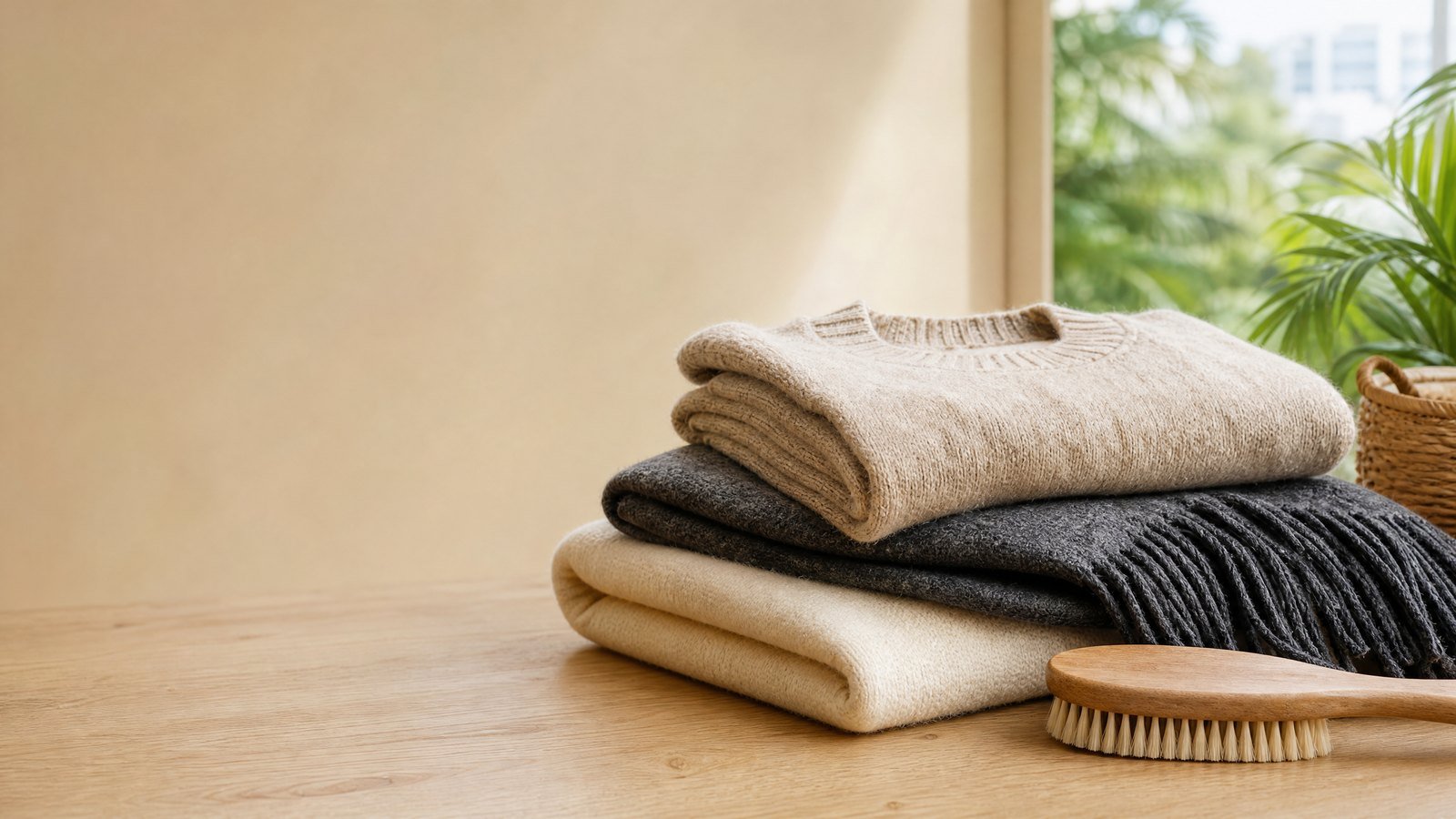
Wool is valued for warmth, softness and natural resilience. From work sweaters and tailored coats to scarves and blankets, it can look refined for years when it is treated thoughtfully. However, wool fibres react differently to heat, friction and moisture than everyday cotton clothing. This wool care guide explains how to wash, dry, store and refresh wool in Singapore’s humid climate.
Begin with the care label
First, read the care label before cleaning any wool item. Some washable wool garments can be hand-washed, while tailored pieces, wool blends and structured coats may be marked dry-clean-only. Therefore, the label should guide every decision, particularly for a favourite item or an expensive wool piece.
Wash wool gently
When hand-washing is permitted, fill a clean basin with cool or lukewarm water and add a small amount of wool-safe detergent. Do not rub, twist or scrub, because friction can cause fibres to mat and felt. Instead, let the item soak briefly, then move it slowly through the water.
Afterward, rinse in cool water until detergent is removed. If machine washing is allowed, choose the wool or delicate cycle, cold water and a low spin setting. Moreover, use a mesh laundry bag for lighter knitwear, and wash similar colours together. Bleach, hot water and strong stain treatments should be avoided, as they can damage the fibre and change the garment’s shape.
Dry flat and reshape
Once washing is complete, lift the garment with both hands to support its weight. Then lay it flat on a clean towel, roll the towel gently and press out extra water. The wool should be reshaped on a fresh dry towel and left flat in a shaded, ventilated area. In Singapore, good indoor airflow is especially helpful, because fabric should be fully dry before it is stored.
Remove odours and wrinkles carefully
Wool often needs less washing than other fabrics. Instead, air the garment after wear in a dry, shaded space. Light odours can fade naturally, while gentle steam can relax minor creases. However, keep a steamer at a short distance and avoid soaking one area. For knitwear, use a fabric shaver carefully to remove pills; do not pull loose fibres by hand. This keeps the surface neat.
Store wool away from moisture and pests
Finally, store wool only after it is clean and completely dry. Body oils and food traces can attract insects, while moisture can encourage odours. Fold sweaters and scarves rather than hanging them, because hangers can stretch shoulders. Additionally, use a clean, breathable storage box or cotton bag instead of a sealed plastic cover. Keep seasonal wool in a cool, dry cupboard.
When should wool be professionally cleaned?
Professional cleaning is recommended for dry-clean-only garments, wool coats, suits, delicate blends, lined pieces and items with difficult stains. For dependable wool care in Singapore, BudgetDryClean.sg can help keep valued wool garments clean, comfortable and ready to wear.
Wool-care questions
Can wool be machine washed? Only wash it in a machine when the care label permits it. Use a wool or delicate setting with cold water.
Does wool shrink? Wool can shrink when it is exposed to heat, agitation or rough handling. Gentle washing and flat drying help protect its size and shape.
How often should wool be cleaned? Air wool after wearing it and clean it when it is visibly soiled, has a persistent odour or has been stained.