
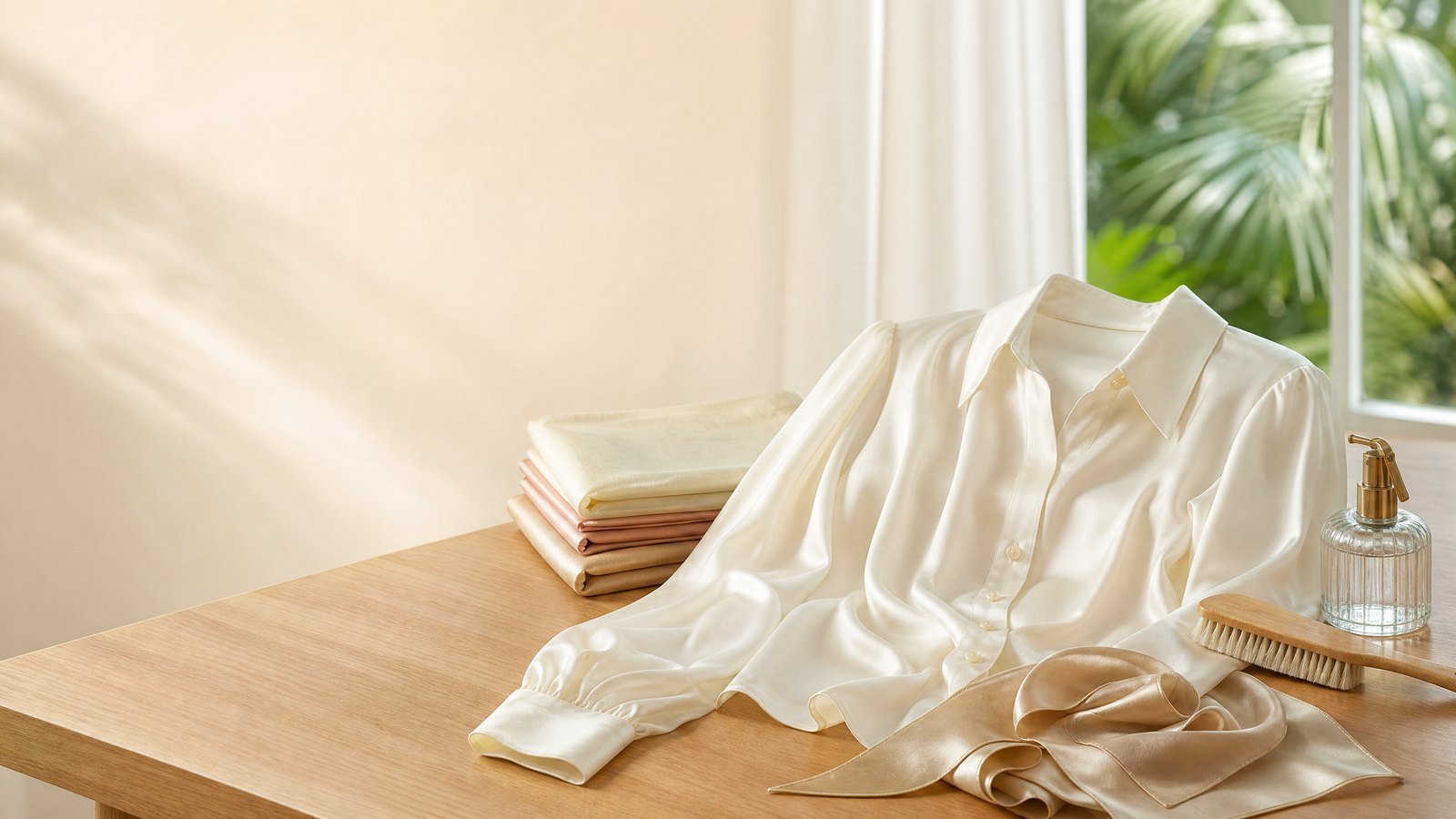
Silk gives blouses, dresses, scarves, sleepwear and bedding a refined finish. Yet it needs a gentler routine than cotton or synthetics. Singapore’s humidity, perspiration, cosmetics and trapped moisture can affect its look and feel. This silk care guide explains how to clean, dry, press and store silk confidently.
Why silk needs special attention
Silk fibres are smooth, lightweight and lustrous. However, they can lose strength or colour when exposed to harsh detergent, friction or intense heat. Therefore, thoughtful treatment preserves drape, sheen and shape. Always check the garment label first. The label should be treated as the clearest instruction, particularly when silk is blended with wool, lace or other delicate materials.
Wash silk with a light touch
First, separate silk from towels, zips and heavier garments, which can pull fibres or snag seams. Fill a clean basin with cool water, then add a small amount of delicate-fabric detergent. Next, move the garment slowly through the water for a few minutes. Do not twist, wring or scrub it, because friction can change the finish. Instead, gently press water through the cloth with your hands.
Afterward, rinse in cool water until detergent is removed. If the label allows it, a brief delicate-cycle machine wash may suit a sturdy silk blend. However, use a mesh bag, cold water and a low spin speed. Moreover, wash like colours together and avoid bleach, strong solvents and fabric softener.
Respond to stains promptly
Stains need quick but careful action. First, blot a fresh spill with a clean white cloth; do not rub. Oil, makeup, perfume and food stains may need specialist treatment, especially once dry. Meanwhile, never apply heat to an unknown stain, as the mark may become harder to lift. For a favourite silk dress, tie or scarf, Budget Dry Clean can assess the stain and select an appropriate process.
Dry silk naturally
Once washing is complete, support the wet garment with both hands. Next, lay it flat on a dry towel and roll the towel gently to remove excess water. The item should then be reshaped and left flat to dry in a shaded, ventilated space. Direct sun can fade colour, while a tumble dryer can shrink or damage silk. In Singapore, choose a room with good airflow and allow it to dry fully before storage.
Furthermore, avoid hanging heavy wet silk from the shoulders. Water weight can stretch the neckline or distort the silhouette. For scarves or light blouses, use a padded drying rack when the fabric is fully supported. As a result, the garment keeps a smoother shape.
Press and steam carefully
Silk often looks best with soft, natural movement. However, deep creases can be eased with low heat. Turn the garment inside out, cover it with a clean cotton pressing cloth and use the lowest suitable setting. Keep the iron moving and test a hidden section first.
A handheld steamer can refresh silk between cleans. Conversely, keep it a short distance from the fabric and never soak one spot. Allow the garment to cool and dry before wearing or storing it. This prevents new creases and moisture marks.
Store silk away from humidity and light
Finally, store silk only when it is completely dry and clean. Body oils, perfume and invisible spills can leave marks over time. Fold knit silk and scarves loosely in a drawer; hang structured blouses and dresses on padded hangers. Additionally, choose breathable cotton garment bags rather than plastic covers, which can trap moisture in humid homes.
Keep silk away from sunlight, heat sources and overcrowded rails. If seasonal items are stored for months, refold them occasionally so permanent creases do not form in the same places. For example, place acid-free tissue between embellished sections to reduce friction. Avoid cedar directly against silk or strong fragrances near the fabric.
When should silk be professionally cleaned?
Professional silk care is recommended for labelled dry-clean-only pieces, tailored jackets, formal gowns, silk with beading, vintage items and garments with stubborn stains. A trained cleaner can assess fibres, dyes, trims and the stain before selecting a suitable method. Therefore, professional cleaning offers reassurance when an item is expensive, sentimental or hard to replace. For careful silk care in Singapore, BudgetDryClean.sg can help keep treasured pieces clean, fresh and ready to wear.
Silk-care questions
Can silk be machine washed? Some washable silk can be washed on a short, cold delicate cycle in a mesh bag. However, follow the care label and hand-wash when unsure.
Can I hang silk to dry? Light pieces may be supported briefly, but flat drying is safer for heavier garments because it helps prevent stretching.
How often should silk be cleaned? Air silk after wear and clean it when it has visible soil, odour or contact with makeup, perspiration or food.